
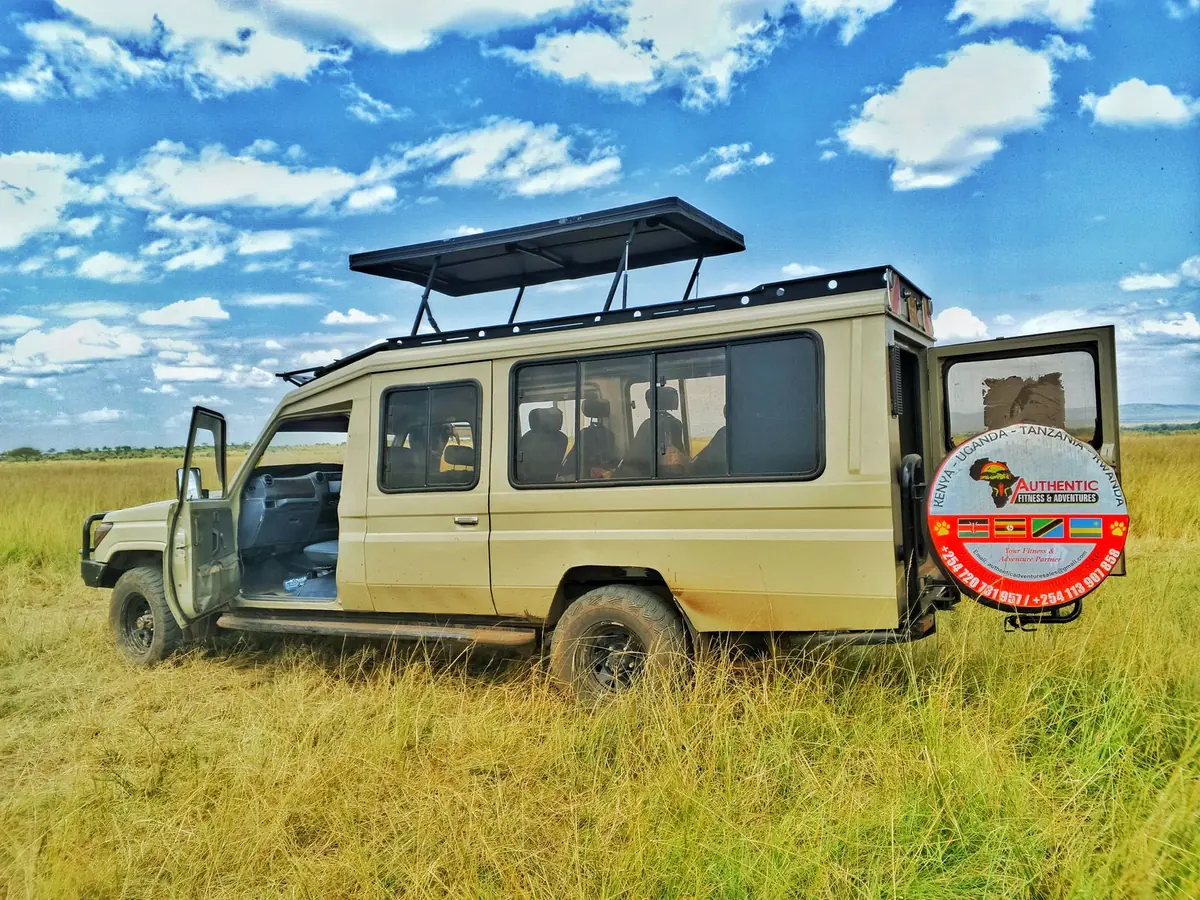
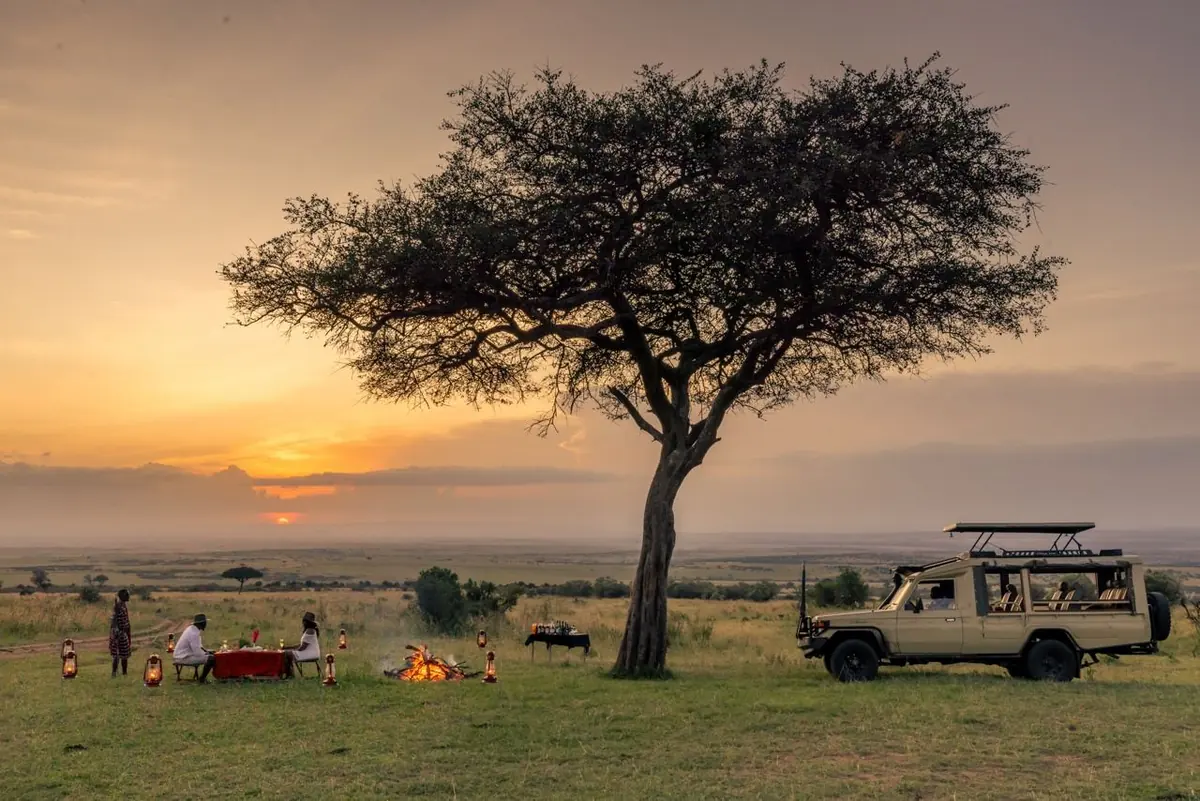
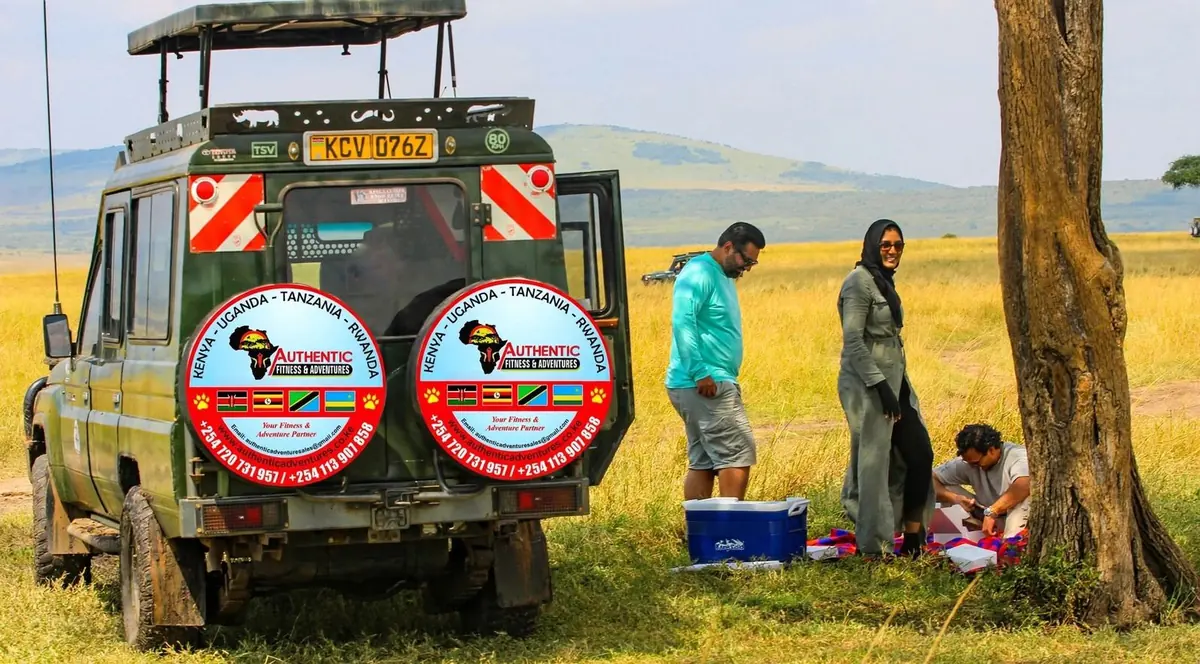

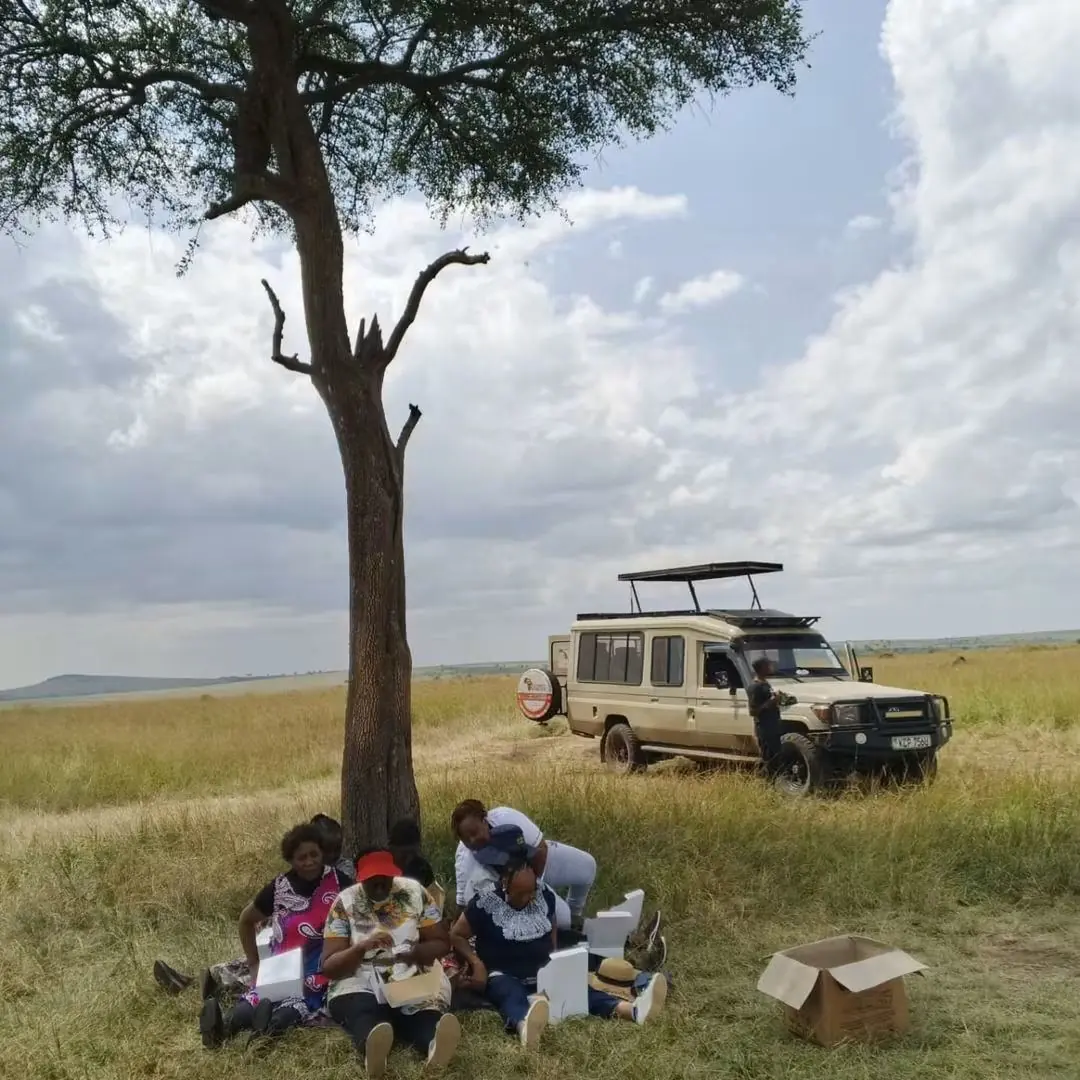
Want the wildebeest without fighting 40 vans for one river bank?
A Kenya safari in July puts you in the dry season just as the Great Migration pours into the Masai Mara from Tanzania. Days are sunny and around 24 to 26°C. Mornings are cold. River crossings often begin late in the month. It is high season, so Mara fees double from 1 July and lodges fill early.


 Title sponsor
Alumni Golf Challenge
We are the title sponsor this year.
Golf is part of who we are, so we put our name behind the Alumni Golf Challenge. Want more golf after the day? Tell us when you are free. We book your tee time at Karen, Muthaiga or Vipingo Ridge and sort the transfers and the stay.
- SeasonDry, high seasonMara fees rise on 1 July
- Mara weather24 to 26°C daysAbout 12°C at dawn
- MigrationHerds arrive in the MaraCrossings often from mid or late July
- Mara fee, non residentUSD 200 per dayUSD 100 until 30 June
- Mara fee, citizenKES 3,000 per dayKES 1,500 until 30 June
Rated 4.9 on Google from 47 reviews. Price confirmed in writing before you pay.
A Kenya safari in July is the start of the most famous wildlife season in Africa. The long rains are over, the grass is drying and the wildebeest and zebra herds push north from the Serengeti into the Masai Mara. Predators follow them. Game drives are easy because animals gather near water.
July is also when prices and crowds climb. The Mara reserve switches to its high season fee on 1 July. The best camps near the river book out months ahead. This guide covers what the migration does in July, the weather, the fees in KES and USD and how to beat the crowds.
Highlights
- Dry, sunny days and cold mornings across the parks
- Migration herds arrive in the Masai Mara through July
- First Mara River crossings often happen from mid to late July
- Masai Mara fees double from 1 July for every visitor category
- KWS park fees stay the same all year
- Conservancies next to the reserve give quieter game drives
- Book four to six months ahead for river camps
Masai Mara reserve fees per person per day, before and after 1 July
| Visitor | January to June | July to December |
|---|---|---|
| Non resident adult | USD 100 | USD 200 |
| Non resident child 9 to 17 | USD 50 | USD 50 |
| East African resident adult | KES 2,500 | KES 5,000 |
| Kenyan citizen adult | KES 1,500 | KES 3,000 |
| Kenyan citizen child 9 to 17 | KES 300 | KES 500 |
| Children 8 and under | Free | Free |
- Tickets cover one day from 6am to 6pm. Each extra day is charged again.
- Private conservancies charge their own nightly fees, often USD 80 to 120 for non residents, paid through your camp.
- Fees are set by Narok County and the Mara Conservancy and are confirmed when you book.
Get my exact price on WhatsApp
Is a Kenya safari in July a good idea?
Yes. July is one of the best months to see big game in Kenya. Rain is low, so roads are good and animals are easy to find. In the Masai Mara the migration herds arrive and the big cats are busy.
The catch is cost and crowds. July is high season for international visitors on summer holidays. If you can travel in late June instead, you pay the lower Mara fee and still catch the first herds in some years.
Where is the Great Migration in July?
In early July most herds are in the Grumeti area and the northern Serengeti in Tanzania. Through the month they push north across the border into the Mara. By late July large groups are usually grazing the Mara plains.
River crossings on the Mara River often start in July, but timing changes every year with the rain. Nobody can promise a crossing on a set date. The safest plan is three or four nights near the river. Our Great Migration calendar shows the pattern month by month.
What is the weather like on a Kenya safari in July?
July is cool and dry. In the Masai Mara, days usually reach 24 to 26°C and nights drop to about 12°C. Rainfall averages around 33 mm for the month, mostly short showers.
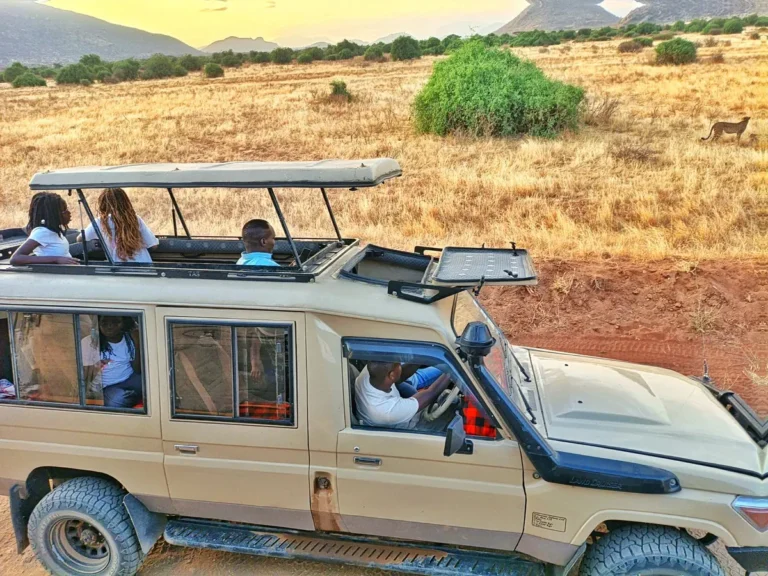
Early game drives are cold, especially in an open vehicle. Pack a fleece, a warm jacket, a hat and gloves. Nairobi is grey and chilly in July, so do not judge the bush by the city sky.
- Masai Mara: warm days, cold mornings, little rain
- Amboseli: dry and dusty, clear views of Kilimanjaro at dawn
- Samburu: hot and dry, elephants at the Ewaso Nyiro river
- Lake Nakuru and Naivasha: cool, pleasant, good for a stopover
How busy is the Masai Mara in July?
Busy, especially near the river crossing points and in the main reserve around the Sekenani side. When a crossing starts, many vehicles gather on the bank. Rangers manage the crowd, but patience helps.
To escape the crowd, stay in a private conservancy next to the reserve. Vehicle numbers are capped and you can do night drives and walks. Our Masai Mara conservancy safari pairs quiet conservancy days with river days in the reserve.
How much does a Kenya safari in July cost?
July is priced at high season rates. The biggest jump is the Masai Mara fee. A non resident adult pays USD 200 per day from 1 July, up from USD 100. A Kenyan citizen pays KES 3,000, up from KES 1,500. An East African resident pays KES 5,000, up from KES 2,500.
Kenya Wildlife Service parks do not change by season. Amboseli and Lake Nakuru cost USD 90 for non residents and KES 1,500 for citizens. Nairobi National Park and Tsavo cost USD 80 and KES 1,000. Lodges and camps also charge their top rates from July to October. Our Masai Mara entry fees guide has the full table.
How many days do you need in July?
Plan at least three nights in the Mara. Two full days give you a real chance at a crossing and plenty of cat sightings. Four nights is better if the crossing is your main goal.
Add Lake Nakuru or Naivasha on the way, or fly to Amboseli for elephants under Kilimanjaro. Road trips from Nairobi take about five to six hours to the Mara. Flights take about 45 minutes.
Do Kenyans and residents get July deals?
Resident rates are lower than international rates at many camps, even in July. Citizen park fees are a fraction of the non resident fee. Group joining safaris cut the cost of the vehicle.
Schools in Kenya are in session for most of July, so local family demand is lower than in August. See our Masai Mara packages for residents for current resident rates.
How to book your July safari
Book early. Camps near the river sell out four to six months ahead for July. Pay a deposit to lock the room and clear the balance in instalments by Mpesa, bank or card.
Our 3 day Masai Mara migration safari is the most booked July trip. For more time on the river, see our river crossing safari or browse all Great Migration safaris. We plan every Maasai Mara trip around your dates and budget.
Questions people ask
Is July a good month for a safari in Kenya?
Yes. July is dry and game viewing is excellent. The migration herds move into the Masai Mara during the month and predators are active. It is high season, so expect higher park fees from 1 July, busier roads near the river and lodges that book out early.
Will I see a river crossing in July?
Possibly. Mara River crossings often start in mid to late July, but the timing changes each year with rain and grazing. Nobody can guarantee a crossing on a set date. Staying three or four nights near the river gives you the best chance.
How much is the Masai Mara entry fee in July?
From 1 July the reserve charges its high season rate. Non resident adults pay USD 200 per day, East African residents KES 5,000 and Kenyan citizens KES 3,000. Children 8 and under enter free. Conservancies charge their own fees on top, usually through your camp.
Is it cold in the Masai Mara in July?
Mornings and evenings are cold at around 12°C. They feel colder in an open vehicle. Days warm up to about 24 to 26°C. Pack a warm jacket, fleece, hat and gloves for early drives, plus light layers and sunscreen for midday.
Is July or August better for a Kenya safari?
Both are excellent. July is often a little quieter and the herds are still arriving. August usually has the most animals in the Mara and more crossings, but it is busier and Kenyan school holidays add local demand. Book either month early for the best camps.
How far ahead should I book a July safari?
Four to six months ahead for camps near the Mara River. Budget and mid range lodges may have space closer to the date, but choice shrinks fast. A deposit holds your room and you can pay the balance in instalments.
Sources we checked: Mara Triangle (Mara Conservancy): conservation fees and ticket rules; Narok County Government (manages the Masai Mara National Reserve); Kenya Wildlife Service: conservation fees from October 2025; Discover Africa HerdTracker: July and the start of Mara River crossings; Sunheron: Masai Mara monthly climate averages; Rough Guides: best time to visit the Masai Mara. Rules and fees change, so we confirm them again when you book.
Ready when you are. Send your dates and group size. We reply with a clear price and a plan you can change.
Chat on WhatsAppYou may also like
Kenya Safari in July, Weather, Wildlife & Best Deals 2025/2026See the detailsRead more4 Day Masai Mara Wildebeest Migration Safari from NairobiSee the detailsRead moreMasai Mara Migration Month by Month GuideSee the detailsRead moreKenya Safari in August: River Crossings, School Holidays and High Season PricesSee the detailsRead moreJune July School Holiday Safari KenyaSee the detailsRead moreMaasai Mara Entry Fees 2026: Non Residents, Residents and CitizensSee the detailsRead more
 3 Day Masai MaraFrom USD 850
 Mara group joiningFrom USD 395
 3 Day AmboseliFrom USD 850
 5 Day Kenya SafariFrom USD 1,180
 Uganda gorilla trekFrom USD 1,260